ADESA
- 3.6
- Rating
- 50.00K
- Installs
- Free
- Price

 Analysis by App-foxy
Buying a vehicle through an auction is very different from browsing a normal dealership listing. The timing matters, the available information needs careful reading, and a bid can become a costly decision if I treat it like a casual shopping trip. ADESA is built for that more focused task: it is a free Auto & Vehicles app from ADESA US that puts an auction-oriented buying experience on a mobile device. After spending time with it, I see the appeal, but also a clear boundary: it is more useful for people who already understand auction buying than for someone looking for a simple car-shopping app.
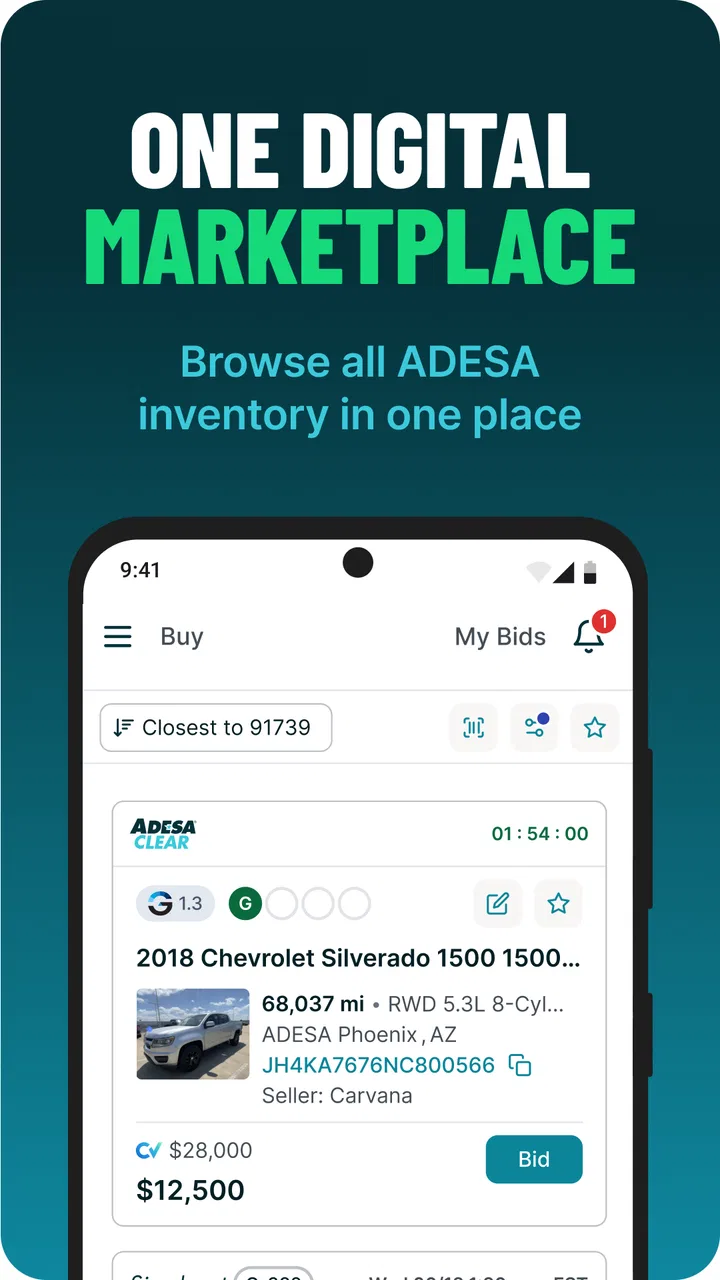
The first impression is practical rather than flashy. The app presents itself as a way to browse opportunities, make decisions, and participate in bidding from a phone. That can be valuable when I am away from a desk or need to keep an eye on a vehicle during a busy day. At the same time, mobile convenience does not remove the responsibility of checking vehicle details, understanding auction conditions, and setting a disciplined limit before bidding. The app can simplify access to an auction; it cannot simplify the risk of buying the wrong vehicle.
How ADESA Holds Up Beyond the First Week
I find the most revealing test after the first week is whether ADESA fits into a repeatable routine rather than merely making auction activity easier to check. I would pay attention to how well my own notes, budget limits, and device habits work alongside it, especially when decisions happen away from a desk. That longer view also brings the question of who can use the app comfortably in different settings into focus.
You May Also Like

 Google Keep - Notes and lists
Google Keep’s Quiet Growth Shows the Appeal of Simpler Notes
As mobile work gets busier, Google Keep keeps winning a simple contest: capture a thought quickly, find it later, and get on with the day.

 Blood Strike: 2.5 Anniversary
Blood Strike’s Loadouts Turn Every Drop Into a Tactical Gamble
A close look at Blood Strike’s custom loadouts: how fast access to signature weapons reshapes its battle royale rhythm, rewards preparation, and narrows the gap between fights.

 Pandora - Music & Podcasts
Pandora’s Music Is Easy to Start, but Harder to Recover
Pandora’s strength is its low-effort path from a seed to a station. Its weak spot is how much confidence it asks you to place in connection, setup, and quiet recovery.

 8 Ball Pool
 Is Built on Rivalries, Rematches, and Routine
A close look at the rivalries, rematches, shared routines, and unanswered safety questions that turn a quick pool match into a persistent mobile community.

 Samsung Music
’s Quiet Strength Is Playing What You Already Own
Its reach comes less from spectacle than from dependable access to a personal library. That simplicity is both the app’s strongest retention engine and its ceiling.

 AccuWeather: Weather Radar
AccuWeather Review: A Quick, Clear Forecast for Everyday Decisions
For everyday plans, the best forecast is the one you can understand quickly. AccuWeather makes rain timing, radar, and local conditions easy to act on, with a few trade-offs.
More From Our News Desk



The first-week appeal is concentrated and practical
During the first week, the strongest benefit is the change in workflow. Instead of treating an auction as something that requires constant access to a computer, I can use a phone as the main point of contact. That matters to dealers, vehicle professionals, and experienced buyers who need to check activity while moving between locations. The app’s purpose is narrow enough to be understandable: it is not trying to become a general maintenance tracker, fuel log, navigation tool, or ownership companion.
That narrow focus is also why the experience can feel more useful than a broad automotive app for the right person. A general marketplace may be better for comparing retail listings, contacting private sellers, or researching a first purchase. ADESA makes more sense when the user is already participating in an auction process and wants mobile access to that environment. I would not install it simply because I am curious about cars; I would install it because I have a specific reason to follow auction inventory or bidding activity.
The app is free to install, and its Everyone age rating makes the initial barrier low from a store perspective. It has reached over 50 thousand installs, with an average rating of 3.3 from around 130 ratings and 56 reviews. Those figures suggest a product with a real user base but a mixed reception, so I would approach it as a specialized tool rather than assume it will feel polished for every kind of buyer.
What I would do before placing any bid
My most useful habit with an auction app is to separate research from action. I would first create a short list of vehicles that fit my needs, then review each one with a written maximum bid. That limit should include the purchase amount and the costs that follow it, such as transport, repairs, inspection, registration, or resale preparation. The app may make it easy to act quickly, but quick access can encourage decisions that feel smaller on a screen than they are in real life.
A realistic example would be a small independent dealer checking inventory between customer appointments. A vehicle appears attractive, the current bidding position looks manageable, and the dealer has only a few minutes available. The sensible workflow is not to bid immediately. I would compare the vehicle with the dealer’s existing stock plan, confirm the expected repair margin, check whether transportation is practical, and only then return to the auction screen. This extra pause is important because mobile bidding rewards attention but can also amplify impulse.
Another useful approach is to treat the phone as a monitoring tool and a laptop or larger screen as the research tool whenever possible. A larger display is usually more comfortable for comparing several records, reading longer descriptions, and keeping notes open. ADESA’s mobile format is most convincing when it complements a careful process rather than replaces it entirely.
The information problem requires discipline
One of the less obvious trade-offs is that convenience can create false confidence. A clean mobile interface may make a listing feel more complete than it really is, especially when I am looking at one vehicle at a time. I would deliberately slow down and ask what decision each piece of information supports. Is it enough to judge condition? Is it enough to estimate transport? Is it enough to know whether the vehicle fits a customer’s needs? If the answer is no, the correct response is more investigation, not a higher bid.
This is also where ADESA differs from a traditional dealership application. Dealership apps usually guide buyers toward a retail conversation, financing inquiry, test drive, or trade-in estimate. An auction platform places more of the evaluation burden on the user. That can be a strength for professionals who have a repeatable inspection and pricing process, but it is a weakness for a first-time buyer who expects a reassuring, guided purchase journey.
Month-to-month value depends on repeated work
After the novelty fades, the app earns its place through recurring usefulness rather than entertainment. If I regularly source vehicles through auctions, mobile access can save small amounts of time repeatedly: checking what is available, following a vehicle, reviewing activity when I am not at a computer, and returning to a buying decision when the timing is right. Those small advantages can add up for a professional who uses the platform as part of a weekly inventory routine.
For an occasional buyer, the value is less certain. If I only need one vehicle and do not participate in auctions regularly, the app may spend most of its life unused. In that situation, a normal marketplace, a local dealer’s site, or an inspection-focused service may be a better long-term fit. ADESA is not the kind of application I would keep installed for general automotive curiosity. Its usefulness is tied to a continuing need.
The recurring value also depends on whether the user builds a system around it. I would keep a separate buying worksheet with the stock or vehicle reference, maximum total cost, expected repair allowance, transport estimate, and intended use. That prevents the app from becoming the only place where important decisions live. It also makes it easier to review past choices and identify whether a purchase was profitable, practical, or simply exciting at the time.
For a dealer, a repeatable routine might begin with a weekly scan of suitable inventory, followed by a smaller group for deeper evaluation. For a private buyer, the routine would be much shorter: define the exact vehicle requirement, research the auction process, arrange an inspection strategy, and decide whether the possible savings justify the added uncertainty. The app can support either workflow, but it does not make the two workflows equally suitable. Professionals are more likely to benefit from repeated access.
Maintenance is mostly behavioral, not technical
The main maintenance burden I noticed is the need to keep my own process organized. An auction app can be installed and opened quickly, but responsible use requires current notes, realistic budgets, and attention to changing opportunities. If I stop updating my assumptions about repair costs or transport, the app remains functional while my buying decisions become stale. That is a dangerous kind of maintenance problem because nothing visibly breaks.
I would also keep notifications and checking habits under control. Auction activity can create a reason to look at the phone repeatedly, even when a vehicle no longer fits the plan. My rule would be simple: if a listing exceeds the written budget or fails a key requirement, I remove it from consideration rather than keep watching it out of curiosity. This protects both time and money.
The current version is 3.1.32, and the app requires at least Android 10. That makes device compatibility an important practical check before relying on it for work. I would update the app when prompted and test the workflow before a time-sensitive auction, rather than discover a compatibility or usability issue when a decision is already urgent. For a professional, a backup access method and a written record of important details are sensible precautions.
There is another kind of maintenance: learning the platform’s rhythm. An occasional user may need time to become comfortable with how listings, bidding, and purchase decisions fit together. That learning curve is not necessarily a flaw, but it means the app rewards repetition. The first session may feel informative; the real test is whether the user can return weeks later and still make a careful decision without starting from zero.
Where fatigue begins
The first source of fatigue is the gap between browsing and completing a sound purchase. The app may help me find and follow opportunities, but the hard work remains outside the screen: verifying condition, estimating total cost, arranging logistics, and accepting that a promising vehicle may not be worth pursuing. Users who expect a smooth retail checkout experience may find this frustrating.
The second is the emotional pressure of auctions. A normal listing can be saved and revisited with relatively little urgency. An auction encourages a deadline mindset, and a phone makes that pressure portable. I may be checking activity in a parking lot, at work, or while handling another task. That convenience is useful, but it can also make it easier to bid without giving the decision the attention it deserves.
The third is the possibility of a mismatch between user expectations and app purpose. Someone looking for ownership tools, service reminders, financing guidance, or a broad vehicle search may find ADESA too specialized. It is not a replacement for an inspection checklist, a mechanic’s opinion, a transport calculator, or a full cost-of-ownership plan. Its job is closer to access and participation in an auction workflow.
The mixed store reception reinforces my cautious view. An average rating of 3.3 is neither a reason to dismiss the app nor a reason to assume it will be effortless. I would judge it based on whether its auction access solves a real problem in my routine. If I need that access often, small points of friction may be acceptable. If I only want a simple way to shop for a personal car, those same points may make another option more comfortable.
Who should use it, and who should skip it?
I think ADESA is best suited to experienced auction participants, automotive professionals, dealers, and buyers who already know how to evaluate a vehicle beyond its headline appeal. It can also suit a disciplined user who has researched the auction process and is comfortable managing inspection, transportation, and budget decisions independently. For these people, mobile access can make an existing workflow more flexible.
I would recommend skipping it if the goal is a beginner-friendly retail purchase with clear guidance at every stage. A first-time buyer may be better served by a dealership platform or marketplace that makes it easier to schedule a test drive, ask questions, compare financing, and return to a vehicle without auction pressure. I would also avoid relying on ADESA if I cannot inspect a vehicle, obtain trustworthy condition information, or calculate the full cost before bidding.
The app is free and rated for Everyone, but those facts should not be confused with universal suitability. The financial and practical consequences of auction buying can be significant even when the software costs nothing. The right question is not whether anyone can download it; it is whether the user has the knowledge and process to use it safely.
My long-term verdict
ADESA earns lasting space on my phone only when auction buying is part of my recurring work or purchasing plan. In that situation, its value comes from access at the moment I need it, especially when I am away from a computer. The app is focused, free, and relevant to a specific automotive workflow, which is a better foundation for long-term use than a novelty feature that I would abandon after a few days.
Still, I would not call it a complete vehicle-buying solution. Its usefulness depends on the quality of the user’s preparation, and its convenience can make rushed decisions easier. The best results come from using it alongside a budget sheet, inspection process, logistics plan, and clear walk-away limit. My recommendation is conditional: keep it if auctions are a regular part of your vehicle sourcing, but choose a more guided marketplace if you want simple personal-car shopping.
ADESA US has made a specialized tool for a specialized audience. That focus is its main strength and its main limitation. I found the app most convincing when it helped me continue an established auction routine, not when I expected it to teach me how to buy a vehicle. If you understand that distinction, it can remain useful month after month; if you do not, the initial convenience may wear off quickly.
FAQs for ADESA
01What is ADESA and what does it offer?
ADESA is a comprehensive vehicle auction app designed for car dealers and buyers. It provides a platform to browse, bid on, and purchase vehicles from auctions across the country. With features like detailed vehicle information, condition reports, and real-time bidding, it streamlines the buying process for users.
02Is ADESA available for both Android and iOS devices?
Yes, ADESA is available on both Android and iOS platforms. Users can download the app from the Google Play Store for Android devices or the Apple App Store for iOS devices. This cross-platform availability ensures that users can access the app's features on their preferred devices.
03How does the bidding process work on the ADESA app?
The ADESA app allows users to participate in live auctions and place bids in real-time. Users can set bid limits, receive notifications of bid status, and manage their bidding activity directly from the app. This ensures a seamless and efficient auction experience for buyers looking for the best deals.
04Are there any fees associated with using the ADESA app?
While downloading the ADESA app is free, there may be fees associated with using certain features or services. These could include bidding fees, purchase fees, or membership costs depending on the auction type. Users should review the app's terms and conditions for a detailed breakdown of potential charges.
05What security measures does ADESA have in place for transactions?
ADESA employs robust security measures to protect user data and financial transactions. The app uses encryption technologies to secure information and verify user identities. Additionally, ADESA provides secure payment gateways and fraud detection systems to ensure a safe and reliable auction experience for all users.
Pros
- User-friendly interface for easy navigation.
- Real-time auction updates keep you informed.
- Wide selection of vehicles to choose from.
- Detailed vehicle reports for informed decisions.
- Secure payment options for peace of mind.
Cons
- Limited customer support hours.
- Occasional app crashes reported.
- Requires stable internet connection.
- Some features require premium access.
- Limited language support options.

ADESA
Gallery